Evaluating experiences with smart cycling technology (2026)
Candidate: Mario Boot (LinkedIn)
Thesis: https://doi.org/10.3990/1.9789036570992
E-bikes are rapidly gaining popularity worldwide, offering benefits such as increased mobility while also introducing new challenges, including higher speeds and risk exposure. Smart Cycling Technologies (SCTs), such as in-ride warning systems and intelligent motor control, are increasingly proposed to enhance safety and user experience. However, their effects on subjective cycling experiences—such as pleasantness and flow—remain insufficiently understood, particularly in real-world settings.
This thesis investigates how SCTs impact subjective cycling experiences and develops an evaluation framework for studying these effects using mobile and wearable sensor data. The research combines a literature review with three empirical field studies conducted within the Smart Connected Bicycle project.
The literature review reveals that existing studies lack robust methods for large-scale, naturalistic, and causal evaluation of SCTs. In response, a conceptual framework is developed to guide future evaluations, integrating experience measurement, sensor data, causal analysis, and contextual factors.
Empirical studies explore (1) simultaneous flow in cycling duos, (2) sensor-based measurement of pleasantness in relation to warning systems, and (3) the effects of intelligent e-bike motor interventions. Findings show that physiological signals (especially electrodermal activity), riding dynamics, and environmental context relate to subjective experiences, but in complex ways. SCTs can improve safety outcomes, such as reducing speed, but may also reduce pleasantness, highlighting a key trade-off.
Across studies, SCT impacts are found to be context-dependent, multimodal, and mediated by interactions between technology, rider, and environment. The thesis demonstrates that mobile sensor data can provide valuable insights into these dynamics, though methodological and analytical challenges remain.
Key contributions include an interdisciplinary evaluation framework, novel methods for in-ride experience sampling, and empirical insights into how SCTs influence cycling experiences. The findings emphasize that SCTs are not inherently beneficial; instead, their impacts are nuanced and require careful, context-aware evaluation. Future work should further integrate sensor data, improve causal modelling, multimodal communication signals, involve diverse stakeholders, and consider the embodied nature of cycling experiences.
----------------------------------------------------
Smart Connected Bicycles: User Acceptance and Experience, Willingness to pay and Road Safety Implications (2025)
Candidate: Georgios Kapousizis, PhD
Thesis: https://doi.org/10.3990/1.9789055843541
The number of people using bicycles is increasing every year, and the COVID-19 pandemic has led to an even bigger increase. This is good news since cycling can in general increase sustainability and reduce transport emissions and congestion in cities. Cycling also has health benefits, especially for conventional bicycle users. During the last decades, there has been a burst in e-bike use. E-bikes have an ever bigger contribution to transport emissions and congestion since they can replace motor vehicles for short trips. Due to their motor assistance, people can cycle further with less effort. This has resulted in an increase in e-bike sales and use in many countries, including the Netherlands. Their popularity is growing rapidly, particularly among commuters and the elderly, however, this increased use of e-bikes comes with an increase in vulnerability. More specifically, in the last years, there has been an evident increase in cycling crashes, often including e-bikes. Smart connected bicycles could be the next revolution in the urban road transport field since they could offer users an alternative transportation mode that brings all the positive characteristics of a(n) (e-)bike, such as easy accessibility to the city while increasing users’ safety. This thesis evaluates the impacts of smart connected bicycles on users’ acceptance, preferences, and willingness to pay. In addition, users’ experience with a smart connected bike prototype is evaluated through a field experiment. A smart connected bicycle is an e-bike integrated with sensors and various systems, such as telecommunication technologies, which is connected to the urban infrastructure through wireless technologies to increase cyclist’s safety and comfort. Therefore, fulfilling its overarching aim, this thesis examines bicycle technologies affecting cyclist safety and investigates factors that influence users’ preferences for accepting smart bicycle technologies across different European countries. It also investigates users’ preferences for individual technologies and estimates willingness to pay values for these technologies in Europe and in the Netherlands. Individuals' perceived safety, perceptions and riding behaviour changes are also measured in practice with the use of a specific set of smart bicycle technologies through field trials in the Netherlands.
----------------------------------------------------
Exploring Deep Learning for Cyclist Emotion Recognition
Florian Andrei Maria, BSc Business & IT
This study explores the application of Recurrent Neural Networks (RNN) to recognise emotions using multimodal physiological signals from cyclists, specifically heart-rate variability (HRV) and electrodermal activity (EDA). These signals are used to develop prediction models (such as LSTM and GRU) that can be deployed on bike-mounted edge devices. This approach aims to enhance urban cycling safety by enabling timely adaptations. The study evaluates the feasibility of these models on edge devices and provides recommendations for their effective deployment to reduce accidents and improve cycling safety
----------------------------------------------------
User Experiences of Ride Interventions on Smart Connected Bicycles
Frank Hemme, MSc Civil Engineering & Management
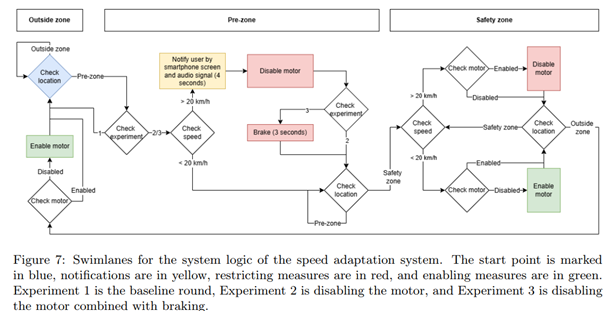
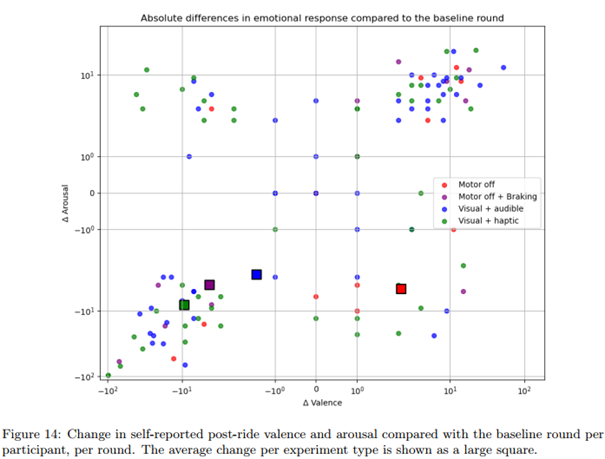
The introduction of the e-bike made cycling a serious alternative to motorised travel. As the number of these fast bikes increases, so do the accidents involving them. Smart Connected Bicycles (SCBs) aim to improve the traffic safety of e-bikes by incorporating smart features that can prevent accidents. Furthermore, SCBs with additional smart technology have the potential to create a more pleasurable and uninterrupted ride. These positive effects only materialise if users want to use the SCBs. To answer this question, it is first necessary to understand how the emotional response of users can be measured. Both biomedical sensors and more traditional methods, such as surveys and in-ride feedback, are used. Biomedical sensors appear to be beneficial, but their data should be critically verified, especially when using newer technology such as wearables. The primary focus of this thesis is on the emotion of delight, as this is an important indicator that the user wants to adopt the system. Delight is defined as an emotional state of high arousal and high valence. Four systems are then evaluated for delight in two field trials: two notification systems and two adaptive motor power systems. The systems that interfered less with the ride (audible notifications and disabling the support motor) were perceived more positively than systems that interfered more with the ride (haptic notifications and automatic braking). For all systems, older and non-Dutch people are more likely to want to adopt the system. More research should be performed into the desires that younger people, females and Dutch people have regarding SCBs. Extra attention should be paid to the smooth integration of all systems, resulting in an aesthetically pleasing product that does not overload the user with information.
----------------------------------------------------
Measuring pleasantness of bicyclists through heart rate variability over self-reports
Mathijs Tobé, BSc Technical Computer Science
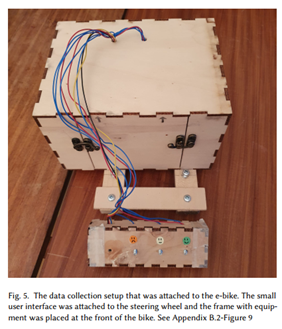
Ultra-short-term (UST) heart-rate-variability (HRV) analysis in non-static conditions, such as bicycling, poses significant challenges. Most HRV analysis is traditionally conducted in a resting state, calling for an examination of UST HRV metrics applicable to our specific setting. We are trying to estimate the axis of valence in the circumplex model of affect, which relates to pleasantness. Consequently, certain HRV metrics may exhibit unreliability or insignificance in this estimation. Considering software and hardware limitations, we focus on time-domain HRV metrics that can be derived from R-R intervals. To facilitate comparison with other subjects’ data, R-R intervals are normalized by dividing each interval by the average R-R interval of that participant. In our experimental study, involving a sample size of N=23, we collected R-R intervals using a Polar H10 heart rate sensor and obtained self-reported pleasantness ratings from cyclists on a scale ranging from 1 (unpleasant) to 3 (pleasant), utilizing an experimental e-bike setup. Our aim is to assess the suitability of heart rate variability analysis for measuring pleasantness. The collected data undergoes preprocessing using two approaches, including a sliding window method. We analyze the data utilizing Support Vector Machines (SVMs) with various kernels and Random Forest classification. The highest achieved F1-score is 47% when using a window size of 130 R-R intervals and incorporating time-domain HRV features such as SDNN, RMSSD, NN50, and pNN50. These findings suggest that additional markers, including frequency-domain HRV and qualitative data, are crucial for a comprehensive assessment. Furthermore, the inclusion of wearable sensor data, such as electrodermal activity, respiration, and skin temperature, may be necessary to accurately estimate self-reported pleasantness in bicyclists
----------------------------------------------------
Evaluating bi-directional connectionless BLE for bike-to-bike communication
Student: Wo de Alcantara, Pedro Henrique
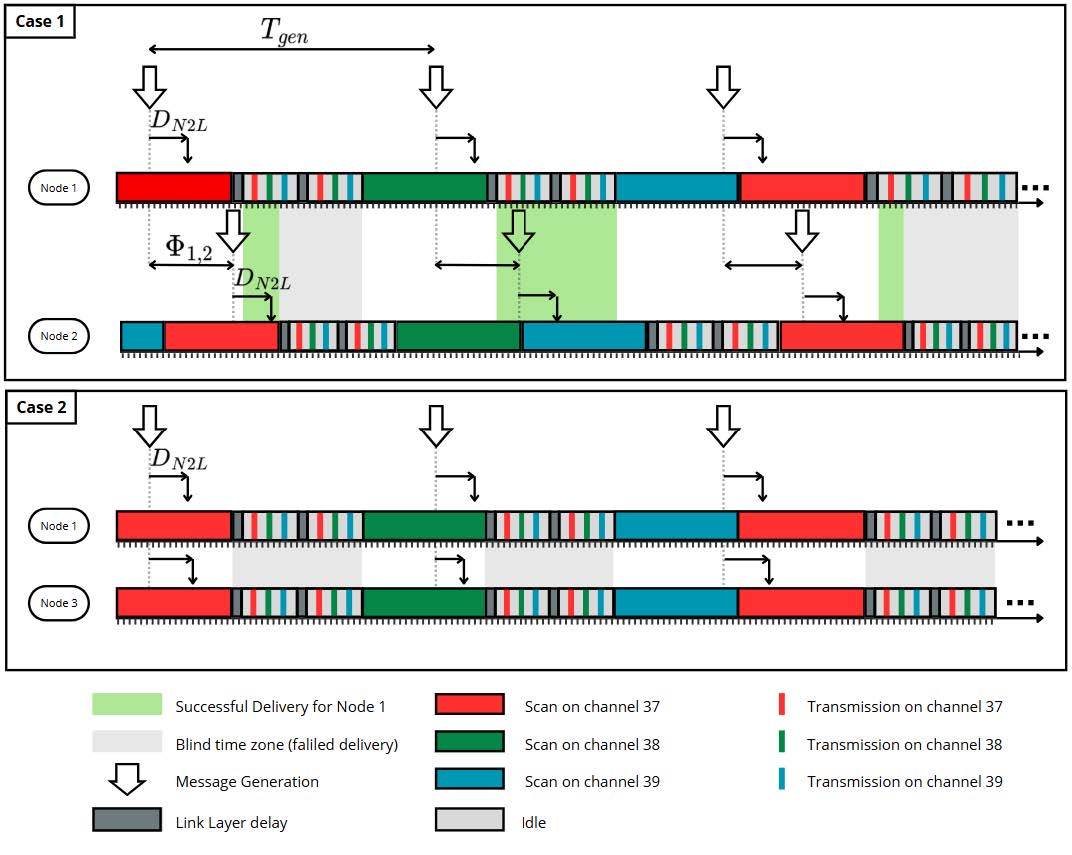
As a response to the growing demand for solutions to improve and manage bicycle utilisation in cities, this paper aims to design and evaluate the features of bike-to-bike (B2B) communication via Bluetooth Low Energy (BLE). Our proposal is a system that disseminates relevant data from surrounding bikes to aid the cyclist in detecting hazardous obstacles and scenarios. Our system uses bi-directional connectionless communication to broadcast messages containing position information to nearby bikes. To determine the possible use cases of our communication design, we evaluated with practical measurements different sets of BLE parameters and compared them with the analytical model from previous research. By doing so, we confirmed that scan window duration and synchronisation are critical factors for optimal message delivery. Moreover, the number of copies sent is a relevant option to reduce energy consumption with minimal effects on message delivery. Our results show that even for time-critical applications B2B via BLE could be an option.
----------------------------------------------------
Unravelling the mind of cyclists: Exploring the potential of fNIRS in capturing subjective cycling experiences
Student: Pookhao Chinpongsuwan, BSc ATLAS
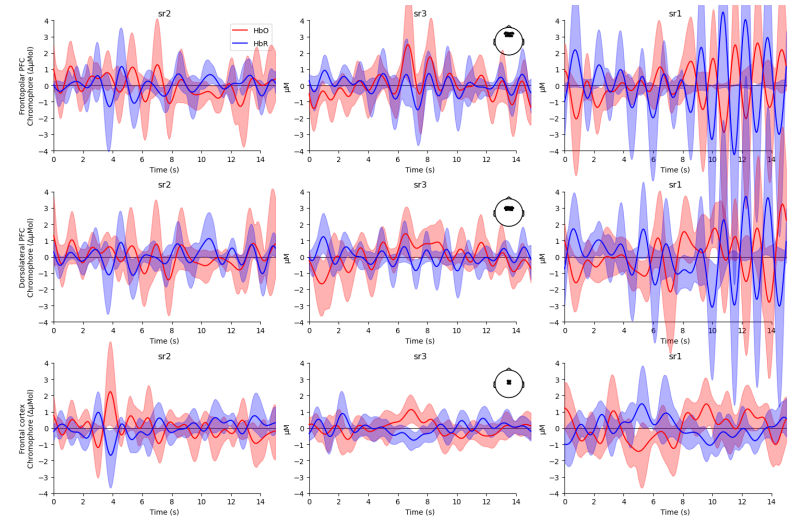
The present study investigated the potential of functional near-infrared spectroscopy (fNIRS) to capture subjective experiences during cycling and its implications for enhancing cycling participation. Using a naturalistic experiment design and self-reports, the study examined the ability of fNIRS to differentiate between positive and negative valence during cycling. Analysis of the collected data revealed higher brain oxygenation variability for negative ratings compared to neutral and positive ratings, with visually distinct oxygenation patterns observed in specific brain regions. While quantitative analysis did not yield significant results, a convolutional neural network (CNN) model achieved a slightly better-than-chance accuracy in classifying the signals. Methodological limitations, including the ambiguity of the valence concepts and immature data preprocessing tools, affected the reliability of the results. The study demonstrated the feasibility of using fNIRS for data collection on cycling experiences and emphasised the need to refine data preprocessing and analysis methods. Addressing these limitations can contribute to a deeper understanding of subjective cycling experiences, and consequently improving urban design, promoting sustainable mobility, and benefiting related fields. The study provides a foundation for future research to develop more robust frameworks for studying subjective cycling experiences in naturalistic settings and advancing knowledge in relevant domains.
----------------------------------------------------
Proxies and Balancing for Shared Flow in Older Adult Cyclists
Student: Laura Kahnt, MSc Interaction Technology, University of Twente
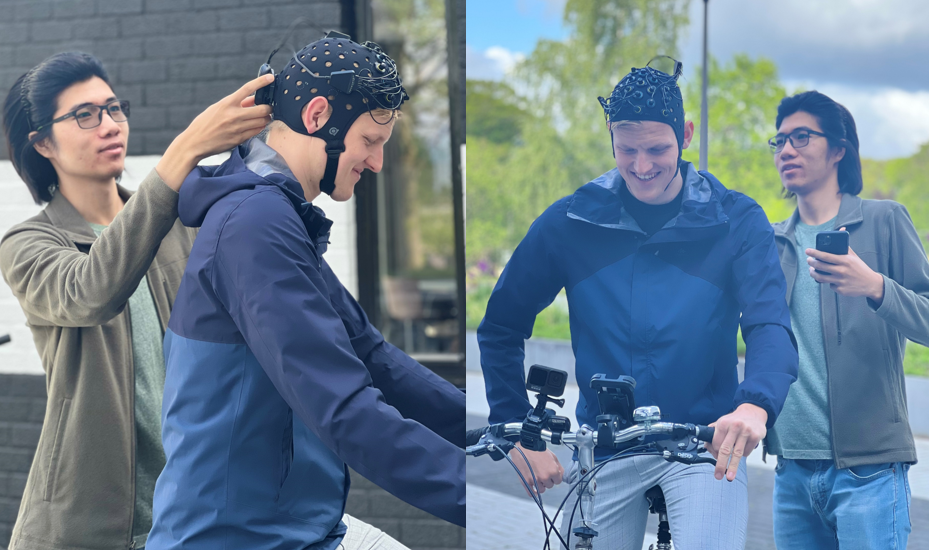
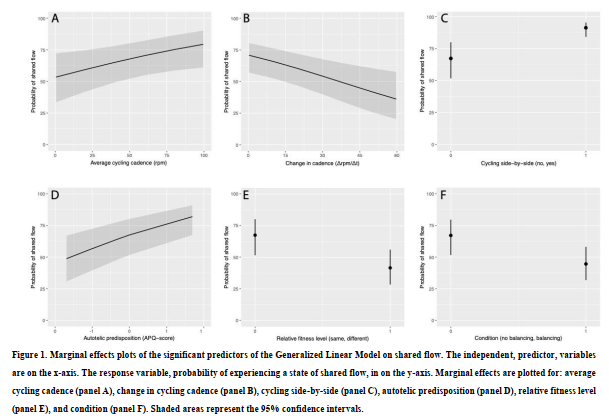
Cycling, a healthy and eco-friendly activity enjoyed by people of all ages and fitness levels, can be further encouraged by improving the cycling experience. The mental state of flow, characterized by complete absorption and engagement in an activity that matches one’s skill level, is considered as the optimal experience in physical activity. While flow has mainly been studied in individual settings, it can also be experienced in groups and has been shown to be more enjoyable. However, differences in fitness levels among cyclists can make it difficult to experience shared flow. The motor of electric bicycles can help address these differences by providing more support to less-fit cyclists (positive balancing) or reducing support for fitter cyclists (negative balancing). The aim of this study was to identify directly measurable proxies for shared flow and examine the impact of positive and negative balancing on shared flow. To accomplish this, an experiment was conducted with pairs of older adult recreational cyclists, a group that the Dutch government actively encourages to cycle more. The collected data was analyzed using mixed-effects regression models. The results indicate that the relative position and cadence of cyclists could serve as directly measurable proxies for shared flow, while heart rate may not be as suitable. However, these findings may not be generalizable to other populations or contexts due to the limitations of this study. Furthermore, this study did not find a significant relationship between balancing and shared flow, though further analysis revealed some leads indicating negative balancing could be more suitable to induce shared flow than positive balancing. However, additional research is necessary before firm conclusions can be drawn on the effect of balancing on shared flow. To advance the field of study, future research should improve data collection and analysis methods, test with diverse populations, and incorporate additional physiological and neurological measures.
----------------------------------------------------
Automatic labeling of road quality using machine learning
Student: Steven Tazelaar, BSc Technical Computer Science, University of Twente
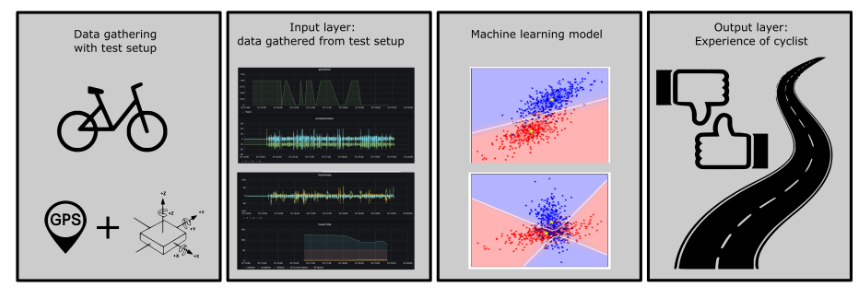
The goal of this research is to create a software that uses machine learning to accurately label road quality when cycling to get an overview of the roads that are in need of improvement or are being experienced as a good road. A data collection setup was made, using IMU and GPS sensors connected to a Raspberry Pi with a connection to bucket. The user labels roads as good or bad using two buttons on the bike handlebars. Two machine learning algorithms are applied to the data: LDA and QDA. A validation was performed on a road of which the model did not get a label as input. LDA ad QDA lead to an accuracy of 0.83 and 0.82 respectively. A specificity of 0.66 and 0.72 was reached respectively and both had a sensitivity of 0.92. During the validation, all three types of roads that were measured got a classification that matched their label, validating the model. Further research could improve the model, for instance use of more sensors, more data to feed to the model, application of other machine learning models and other methods of labeling data. The LDA and QDA machine learning algorithms both have the potential to automatically label road quality in cycling.
----------------------------------------------------
Early Warning System for Safe Lateral Maneuver of Bicycles
Student: Kaushik Kalaiselvan, Pervasive Systems Group, Faculty of Electrical Engineering, Mathematics & Computer Science
Sustainable and smart mobility strategies are now starting to be adopted to reduce the CO2 emission as well as take advantage of digitalization and automation to achieve seamless, safe, and efficient transportation. Bicycles and e-bikes are considered to be the leaders of this transition, as they are cost-effective and have a positive impact on health. With the growing popularity and usage of bicycles, cycling safety becomes more critical. The lateral maneuver of bicycles is a typically apprehended maneuver on the roads and improper assessment of the surroundings during this typically causes various accidents. Although this action is highly similar to the lane change maneuver performed in cars, the assistance systems developed for cars will not be effective for bicycles, due to the characteristics traits of bicycles such as limited size/space, low cost, low weight, vehicle dynamics, and their road infrastructure. This brings many challenges to the system design. The solutions for bicycles are required to be cost-effective, less complex in terms of hardware and software design, efficiently provide maximum utility with minimal resources, and provide a relatively good accuracy across different environments at the same time. In this work, we design and demonstrate a novel multi-modal early warning system to assist cyclists in identifying dangerous situations during lateral maneuvers. To the best of our knowledge, this is the first work that addresses the constraints, designs a complete system for lateral maneuver of bicycles, and validates it using extensive experiments in real-road scenarios. It consists of a 76GHz millimeter wave (mmWave) radar sensor and two ultrasonic sensors to detect targets such as cars, trucks, bicycles, and pedestrians in the rear-side blind-spot regions as well as approaching from behind; and using the combination of Time-to-Collision (TTC) and Minimum-Safe-Distance (MSD) metrics to assess and generate warnings about potential danger at an early stage. The warnings generated by the system include two distinct information and provide improved utility towards the safety of bicycles. The warnings indicate the side of potential maneuvering hazard to host cyclist and of a dangerously approaching vehicle right behind the host bicycle. This additional information can be used to alert the cyclist of the approaching bicycle to be aware of the host bicycle to mitigate a collision. From the extensive experiments in real-road scenarios, the method is deemed feasible and can identify threats and warn the rider about 5 seconds in advance with an accuracy of 95.2%.
----------------------------------------------------
A Low-Budget, End-To-End Warning System for Bicycles using Monocular Vision and Vibrating Handlebars
Student: Marrit Schellekens, Pervasive Systems Group, Faculty of Electrical Engineering, Mathematics & Computer Science
Awareness of surrounding traffic is crucial for safety. Nowadays warning and information technology in cars is often used to supplement people’s awareness of their surroundings. This thesis presents such a warning system, but designed for bicycles instead. An end-to-end, low budget system was developed, that warns cyclists of upcoming traffic. The only sensor input to the system is a monocular camera, and the processing is done on a cheap 100$ computer. For processing the choice was made to use the Yolov4 neural network, in combination with custom algorithms for tracking and finding the direction of travel. Additionally, a survey was performed to explore people’s acceptance of such a system, and find the necessary performance such a system must have. The survey indicated such a system must have warning times of at least 3-4 seconds, which in practice was only reached less in less than 50% of cases. Additionally parked cars often created false warnings. The main obstacle in having a faster warning time or less false positives was the performance of the tracking algorithm.
----------------------------------------------------
Forward Collision Warning System with visual distraction detection in bikes
Student: Visshnu Govindaraj, Pervasive Systems Group, Faculty of Electrical Engineering, Mathematics & Computer Science
The recent development in urbanization has led to a persistent increase in road traffic volume and traffic accidents. Bicycles and Electric Bikes (e-bikes) are highly recommended due to the pollution generated by high-end automobiles, and they are also cost-effective, environmentally friendly, and have health advantages. The increase in traffic volume and accidents has fueled the research on Forward Collision Warning (FCW) systems in automobiles for proper safety of the driver. Forward collision occurs more frequently which leads to fatality on both sides. However, adapting the FCW systems in high-end
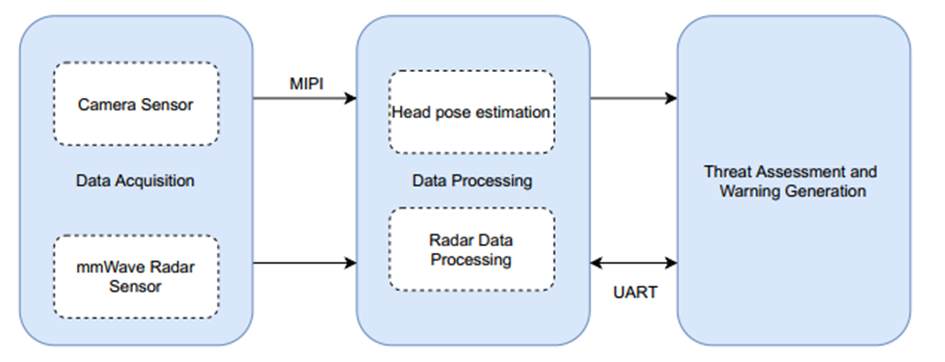
automobiles to bicycles has limitations due to complexity, cost, and size. In this master thesis, a multi-sensor integrated forward collision warning(FCW) system with visual distraction detection is developed. The system uses Millimeter Wave (mmWave) radar module for detecting the vehicle in the front and a camera module to estimate the head pose of the rider. The Time-To-Collision (TTC) and Minimum Safe Distance (MSD) metrics are then used to assess the threat and alert the rider. The Threshold of the TTC is varied based on the alertness of the rider. This method shows good performance with an accuracy of 96.7% in shared road scenarios.